
If you manage properties in Los Angeles, your IT environment doesn’t look like anyone else’s. Not a law firm’s, not a healthcare group’s, not a financial services company’s. You’re running Yardi or MRI across a mixed portfolio of buildings. Your staff is scattered across multiple locations, sometimes dozens of them. You’re handling tenant financial data under California’s strict privacy laws. And when something breaks at a high-rise in Downtown LA, somebody has to physically get in a car and go there.
That last part is where most managed service providers fall completely silent.
I’ve been doing IT work in Los Angeles for a long time, and a significant portion of what Crimson IT does is built around commercial real estate and property management. This isn’t a vertical we decided to target last year because someone read a market report. It’s work we’ve been doing long enough to know where the real problems live – and they’re rarely where a generic MSP thinks to look.
What “Boots on the Ground“
Actually Means in Real Estate IT
Let me give you a concrete picture of what supporting a Downtown LA high-rise actually looks like, because it’s not glamorous and it’s not remote.

It means going into network closets, replacing UPS batteries before they take a floor offline, and being on-site when a carrier needs a warm body to coordinate an ISP fix. It means hardware refreshes scheduled around building operations, not our calendar.
A few months ago, a client called about a mysterious beeping noise nobody could identify. It was a UPS that had lost power. A five-minute fix if you’re standing in front of it — a crisis if you’re troubleshooting it remotely with someone who doesn’t know what they’re looking at.
Our clients range from 15-person teams managing five properties to 300-person organizations with 30 locations across the metro. Every building has its own network configuration, hardware, ISP relationship, and quirks. That’s not a help desk problem — it’s an infrastructure problem that requires local presence and institutional knowledge. Remote-only providers simply cannot serve this industry well.
Yardi and MRI Are Not Generic Business Applications
This is where a lot of general MSPs quietly get in over their heads.
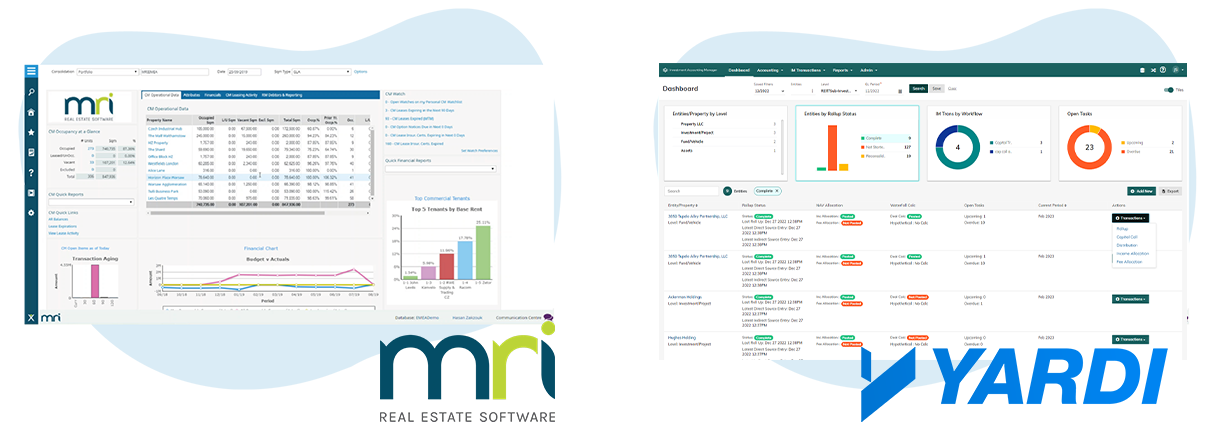
Yardi Voyager and MRI Software are complex, database-driven platforms with specific infrastructure requirements, server sizing considerations, and upgrade cycles that can break your operations if handled without experience. A generalist will treat Yardi like any other line-of-business app — and then wonder why performance degrades or why an update caused problems across the whole environment.
Knowing what these platforms actually need from the underlying infrastructure — the SQL Server dependencies, the network requirements, the database-specific backup considerations — isn’t something you get from reading documentation once. It comes from having worked in these environments enough times to know what breaks and why.
Why “Competent” Isn’t the Same as “Right for Real Estate”
A good generalist MSP can handle a lot — helpdesk support, Microsoft 365 administration, basic security hygiene. The problem isn’t competence. It’s context. Real estate IT has enough domain-specific complexity that even a capable provider without industry experience is navigating partially blind.
They don’t know that Yardi going offline on the third of the month means delayed rent collection, cash flow impact, and your CFO on the phone within the hour. A generalist logs a priority ticket. A specialized partner escalates before the phone rings.
The consequences of misaligned IT support also compound in ways that aren’t obvious upfront. A tenant data breach doesn’t just create regulatory exposure — it damages the leasing relationships your business depends on. The technical failure is recoverable. The reputation damage is slower and far more expensive to fix.

The Compliance Gaps Are Boring, and That’s the Problem
After years of onboarding property management clients from other providers, the gaps we find are almost never exotic. They’re the basics — and that somehow makes it worse.
When we evaluate new clients against NIST standards, the most common findings are:
For property management firms, this matters more than in most industries because of what you’re holding: tenant financial data, Social Security numbers, payment histories, and lease agreements — all potentially sitting in systems that haven’t had a security review in years. California’s privacy laws have real teeth. A compliance failure quickly becomes a legal problem and a tenant relationship problem.
The time to find these gaps is before something happens, not after.
Disaster Recovery in Los Angeles Means Something Specific
Backing up to the cloud is not a disaster recovery plan. It’s part of one. For Southern California firms, the full conversation has to include:
Geographic redundancy
Put backup infrastructure outside the fault zone — not just a different building in the same metro area
Seismic Scenarios
Where a major event affects your office and multiple properties simultaneously
Staff Access Planning
For when physical access to your office is disrupted for days
Disaster recovery for an LA firm has to be designed for LA — not adapted from a template built for a market where the biggest risk is a bad thunderstorm.
What to Actually Ask When You’re Evaluating IT Partners
If you’re unsure whether your current provider is the right fit, ask them these directly:
On-site coverage — How do they handle issues at individual properties across a metro area? A remote-only model may not work for your portfolio.
Yardi/MRI experience — Can they give you specific deployment examples, not just confirm familiarity?
CCPA workflow — Can they walk through how they’d handle a tenant data subject access request without hesitation?
Backup location — Where does their infrastructure sit relative to the San Andreas Fault? “We have a data center in LA” is not a disaster recovery strategy.
The right IT partner isn’t the largest or the most polished. It’s the one that knows your software, understands compliance before something goes wrong, and built their disaster recovery plan for Southern California — not borrowed it from somewhere else.
If your current provider checks all of those boxes, you’re in good shape. If you’re not sure, that uncertainty is usually telling you something.